
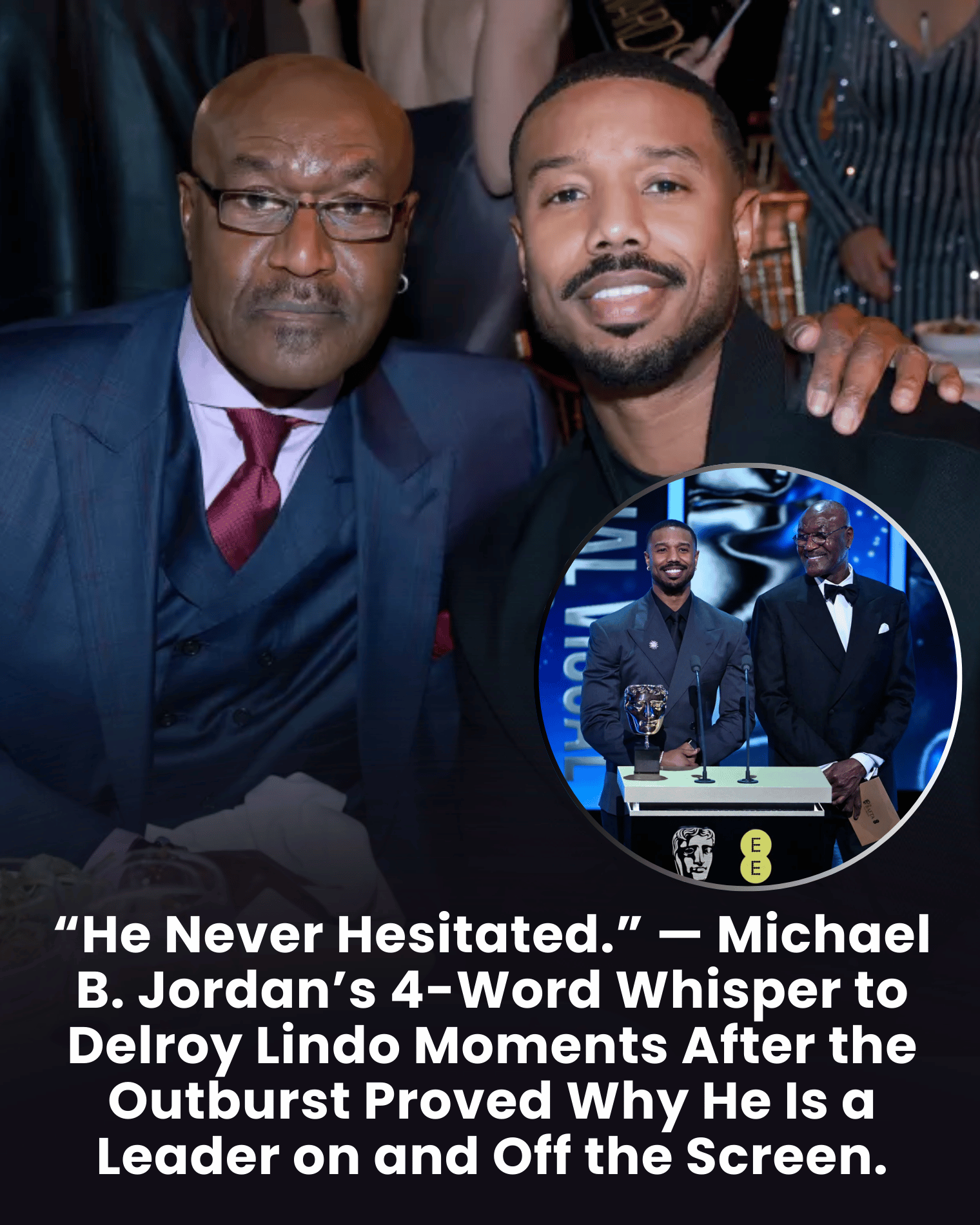
In the split second after a racial slur pierced the air inside London's Royal Festival Hall, the atmosphere shifted from celebration to shock. Cameras were rolling. The audience froze. And on stage, two veteran actors stood under the glare of international broadcast lights.
What happened next lasted only a few seconds—but it is now defining the narrative of the 79th BAFTA Film Awards.
As the disruption echoed through the auditorium, Michael B. Jordan reportedly leaned slightly toward his co-presenter, Delroy Lindo, without breaking composure. Lip-readers analyzing the now-viral clip believe Jordan quietly said four words: "Keep going, we're good."
It was barely audible. It wasn't picked up by microphones. But it was visible enough to spark widespread discussion online.
The significance of that whisper lies not in volume, but in timing. In live television, five seconds can feel like five minutes. A single reaction—anger, confusion, confrontation—could have spiraled the ceremony into chaos. Instead, Jordan's message appeared to anchor the moment. Lindo continued. The presentation moved forward. The show did not collapse.
Observers noted that Jordan never flinched dramatically, never turned fully toward the source of the outburst. His posture remained firm. His expression, steady. It was not denial of what had happened—it was command of the moment.
Leadership, particularly under pressure, is often defined by subtle choices. Jordan's whisper suggested awareness not only of his own composure but of his colleague's emotional space. In an instant when tension threatened to escalate, he offered reassurance rather than reaction.
In the 48 hours since, the clip has circulated widely across social media platforms. Fans have praised what they describe as "mental fortitude under fire," pointing to the way Jordan balanced personal dignity with professional responsibility. The incident itself prompted formal apologies from both the BBC and the British Academy of Film and Television Arts, but the image that continues to resonate is that quiet exchange between two men on stage.
For many viewers, the whisper symbolized solidarity. It was not a grand speech about resilience. It was not a visible display of outrage. It was four calm words delivered at exactly the right time.
Jordan has built a career portraying complex leaders—fighters, visionaries, flawed heroes navigating impossible circumstances. Yet in this unscripted moment, there was no director calling "cut." No second take. Just instinct.
The ceremony eventually returned to its celebratory rhythm, but the brief pause has become part of awards-season memory. Not because of spectacle, but because of restraint.
In a room momentarily shaken by hostility, leadership did not arrive in a raised voice. It arrived in a whisper.