
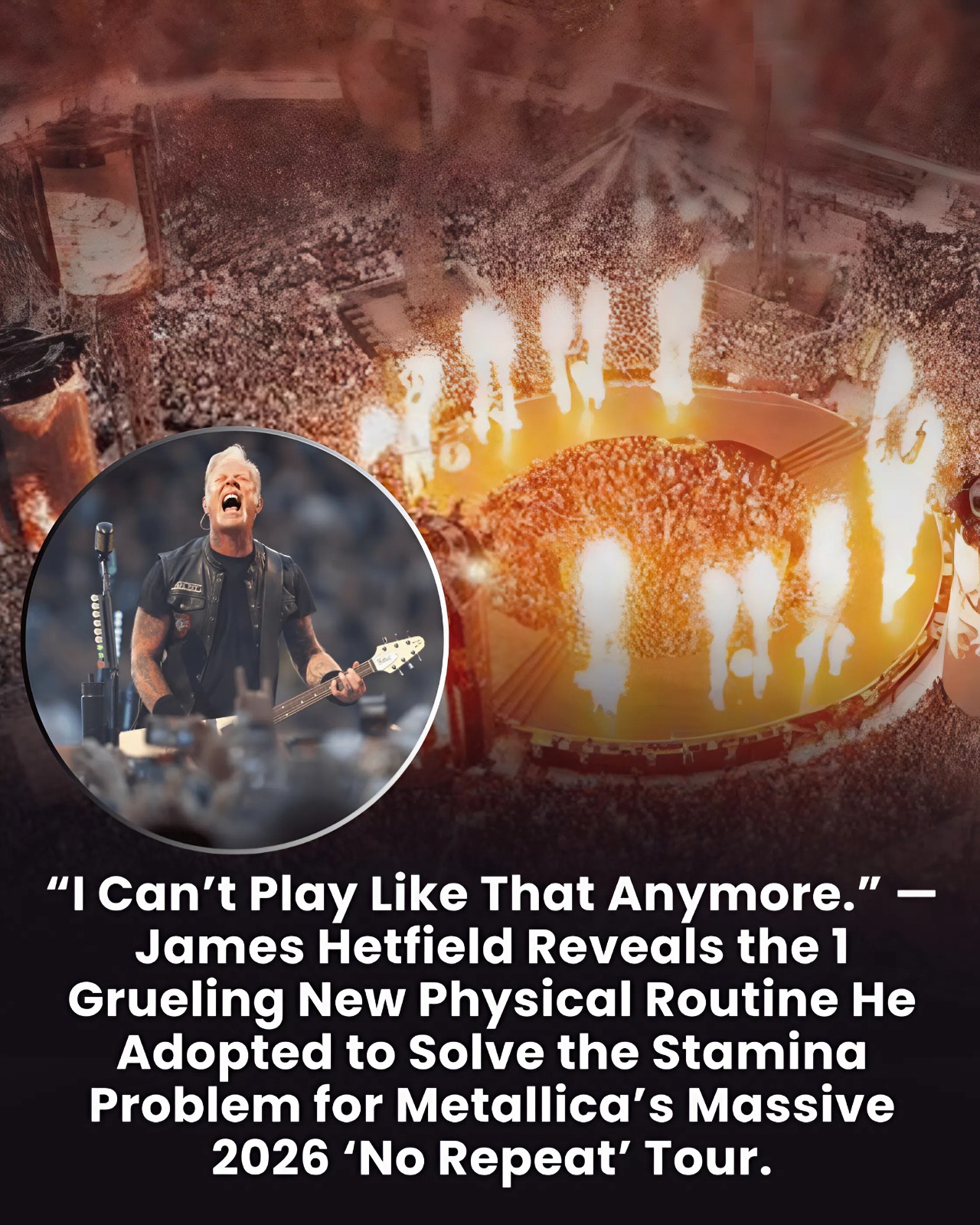
When James Hetfield looks out at a stadium crowd, he doesn't see nostalgia. He sees responsibility. And as Metallica prepares for the massive 2026 European leg of its ambitious "No Repeat Weekend" tour, that responsibility has never felt heavier.
The concept is simple for fans and brutal for the band: two completely different two-hour sets performed within 48 hours in the same city. No recycled setlists. No repeat songs. For audiences, it's a dream scenario. For musicians now in their 60s, it's a physical gauntlet.
"I can't play like that anymore," Hetfield reportedly admitted during recent conversations about the upcoming run. The comment wasn't about ability. It was about endurance.
The realization came during early rehearsals when the band tested back-to-back full-length sets. Hetfield felt the strain in his voice and body almost immediately. Decades of high-octane performances—combined with the natural wear of time—made it clear that old touring habits would not sustain this new format.
The wake-up call was sobering. The fear wasn't abstract. It was visceral: running out of stamina mid-set in front of 80,000 fans.
To confront the issue, Hetfield turned to sports performance specialists and vocal conditioning experts. The solution was not minor tweaks but a comprehensive overhaul. At the center of it is a high-altitude vocal resistance training program designed to increase lung capacity and breath control under stress. The regimen simulates thinner air environments, forcing the diaphragm and intercostal muscles to work harder during practice sessions.
The goal is simple: make sea-level stadium shows feel physically easier than rehearsals.
Alongside the respiratory conditioning, Hetfield adopted a strict anti-inflammatory protocol. Sources close to the tour describe a tightly monitored nutrition plan aimed at reducing joint swelling and muscle fatigue. Processed sugars are reportedly eliminated. Hydration levels are tracked obsessively. Recovery windows between rehearsals are scheduled with the precision of a professional athlete's training camp.
For a frontman known as much for grit as discipline, the adjustment hasn't been easy.
He has reportedly admitted that he hates the structure—the measured meals, the mandatory recovery sessions, the breathing drills that feel more clinical than creative. Yet the motivation remains singular: not letting down the crowd.
The "No Repeat Weekend" format demands mental stamina as well. Memorizing two entirely distinct setlists requires sharp focus, especially when transitions between songs can be physically explosive. Downpicked riffs, sustained growls, and rapid-fire tempo shifts leave no room for fatigue.
Industry observers note that Metallica's decision to double the creative output per city raises the stakes for legacy acts. It signals ambition rather than retreat. But ambition at this scale requires preparation that mirrors elite sports.
Hetfield's transformation underscores a broader truth about longevity in heavy metal. Raw intensity alone no longer carries the night. Conditioning does.
As the European dates approach, reports describe him as being in robust health—stronger, leaner, more calculated in energy expenditure. The edge remains, but it is now supported by science.
The fear of faltering in front of tens of thousands may have sparked the change. What it has produced is a recalibrated frontman prepared to deliver two nights of thunder without collapse.
For Metallica's 2026 run, stamina isn't optional. It's engineered.