
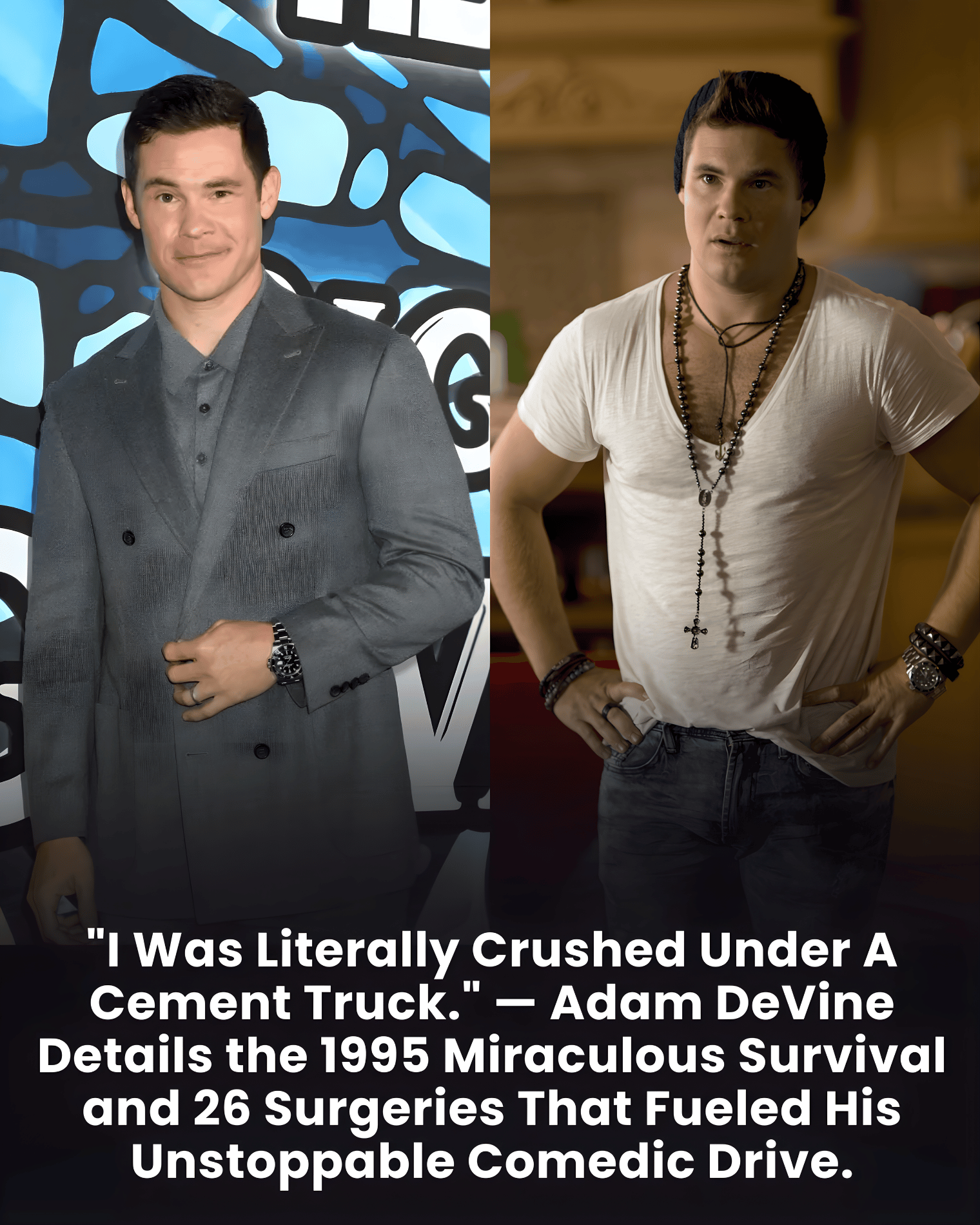
Long before audiences recognized Adam DeVine as the wildly energetic comedian behind unforgettable characters like Bumper in Pitch Perfect, his life had already been shaped by an almost unimaginable childhood trauma. In 1995, when DeVine was just 11 years old, he was involved in a devastating accident that nearly ended his life and permanently altered the course of his future.
The incident occurred while he was walking his bicycle across a street in his hometown. Without warning, a massive cement truck—reportedly weighing more than 40 tons—struck him and dragged his body beneath its wheels. The impact shattered his legs and caused catastrophic injuries across much of his lower body. Emergency responders rushed him to the hospital, where doctors faced a grim reality: the damage was so severe that there were serious concerns he might never walk again.
To stabilize him and manage the overwhelming trauma, doctors placed DeVine in a medically induced coma. For his family, the days that followed were filled with fear and uncertainty. Surgeons warned that the injuries were extensive and that amputation might become necessary if the damage to his legs proved impossible to repair. What followed instead was a long and grueling medical battle.
Over the course of his recovery, DeVine underwent approximately 26 surgeries as doctors worked to reconstruct his legs and repair the damage. The procedures were painful and the rehabilitation was slow. Even after leaving the hospital, he faced years of physical therapy to regain strength and mobility. Learning to walk again became a daily challenge that required immense determination.
The physical recovery, however, was only part of the struggle. As DeVine returned to school, he often relied on a wheelchair during the early stages of his rehabilitation. The visible effects of his injuries made him a target for teasing and bullying from some classmates. Instead of retreating inward, he developed a powerful coping mechanism: humor.
Comedy became both a shield and a form of self-expression. By making others laugh, DeVine could redirect attention away from his physical limitations and toward his personality and creativity. That instinct to turn pain into humor gradually evolved into the loud, fearless comedic style that later defined his career. The same high-energy presence that audiences now associate with him began as a way to reclaim confidence during one of the most difficult periods of his life.
As he grew older, DeVine channeled that resilience into entertainment. He eventually found success in television, film, and stand-up comedy, building a reputation for his explosive comedic timing and unapologetically bold characters. Roles in projects such as Workaholics and films like Mike and Dave Need Wedding Dates helped cement his status as one of Hollywood's most recognizable comedic voices.
Looking back, DeVine often speaks about the accident as a defining moment that shaped both his outlook and his drive. Surviving such a traumatic event—and enduring the long path of recovery that followed—instilled a determination that carried him into adulthood. What could have been a life-ending tragedy instead became the unlikely origin story of a performer whose laughter now reaches millions.
For DeVine, comedy was never just about jokes. It was about resilience, survival, and the power to transform hardship into something that could bring joy to others.