
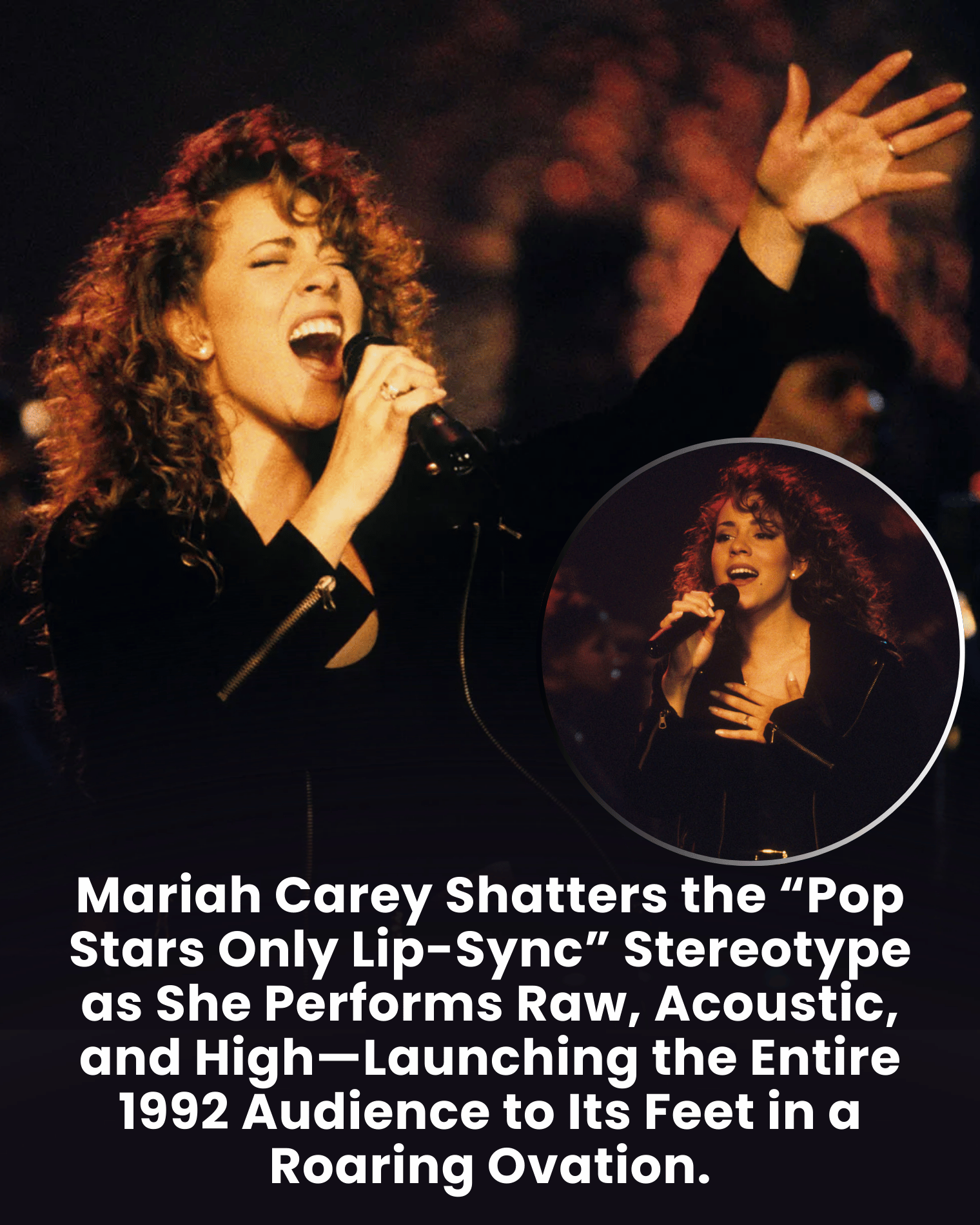
In the early 1990s, Mariah Carey was already a rising superstar, known for her dazzling vocal runs and astonishing five-octave range. Yet despite her chart-topping success, whispers circulated throughout the music industry suggesting that her remarkable voice might be enhanced by studio production. Some critics speculated that the soaring high notes and signature whistle register heard on her records were difficult to reproduce live. Rather than ignore the rumors, Carey decided to confront them head-on in the most direct way possible—by stepping onto a stage with nothing but a microphone, a band, and her voice.
The opportunity came in 1992 when she appeared on the popular television series MTV Unplugged. The show was known for stripping away the elaborate production often associated with pop performances, presenting artists in an intimate acoustic setting. For Carey, it became the perfect platform to demonstrate that the extraordinary vocals fans heard on her albums were not the result of studio tricks but the product of raw talent.
When the performance began, the atmosphere inside the venue was electric. The audience knew they were about to witness something special, but few could have predicted just how memorable the night would become. Carey delivered a set that highlighted both the power and emotional clarity of her voice. Without heavy production or electronic effects, every note rested entirely on her vocal control.
The defining moment came when she performed a cover of the Jackson 5 classic "I'll Be There." Accompanied by Trey Lorenz and a simple acoustic arrangement, Carey approached the song with a mix of reverence and personal flair. Her delivery started gently, allowing the melody to unfold naturally. As the performance built toward its climax, her voice expanded effortlessly, filling the room with stunning clarity.
When Carey reached the song's highest passages, the audience erupted. Her voice soared into the upper register with remarkable precision, proving beyond doubt that her famous whistle notes were entirely authentic. The reaction was immediate: people rose to their feet, applauding and cheering as the final notes echoed through the venue.
The performance did more than silence critics—it became a defining moment in her career. The live recording of "I'll Be There" was later released as a single and quickly climbed the charts, eventually reaching No. 1 on the Billboard Hot 100. It was an extraordinary achievement for a live cover performed in an acoustic television setting, and it confirmed that Carey's vocal talent could captivate listeners just as powerfully in person as it did on record.
Music experts and vocal coaches frequently point to the MTV Unplugged session as one of the clearest demonstrations of Carey's technical skill. Her ability to shift seamlessly between delicate phrasing, powerful belts, and ethereal whistle tones showcased the full scope of her range. Each note landed with accuracy, control, and emotional depth—qualities that helped cement her reputation as one of the greatest vocalists of her generation.
Over time, the performance has become legendary among fans and musicians alike. It remains a reference point whenever discussions arise about truly exceptional live singing. The moment not only reshaped public perception of Carey but also helped establish her enduring title among admirers: the "Songbird Supreme."
More than three decades later, the 1992 MTV Unplugged performance still resonates as a reminder that extraordinary vocal talent can stand entirely on its own. With nothing but a microphone and an acoustic band, Mariah Carey delivered a performance that transformed skepticism into admiration and left an audience roaring to its feet—proving once and for all that her remarkable voice was as real as it was unforgettable.