
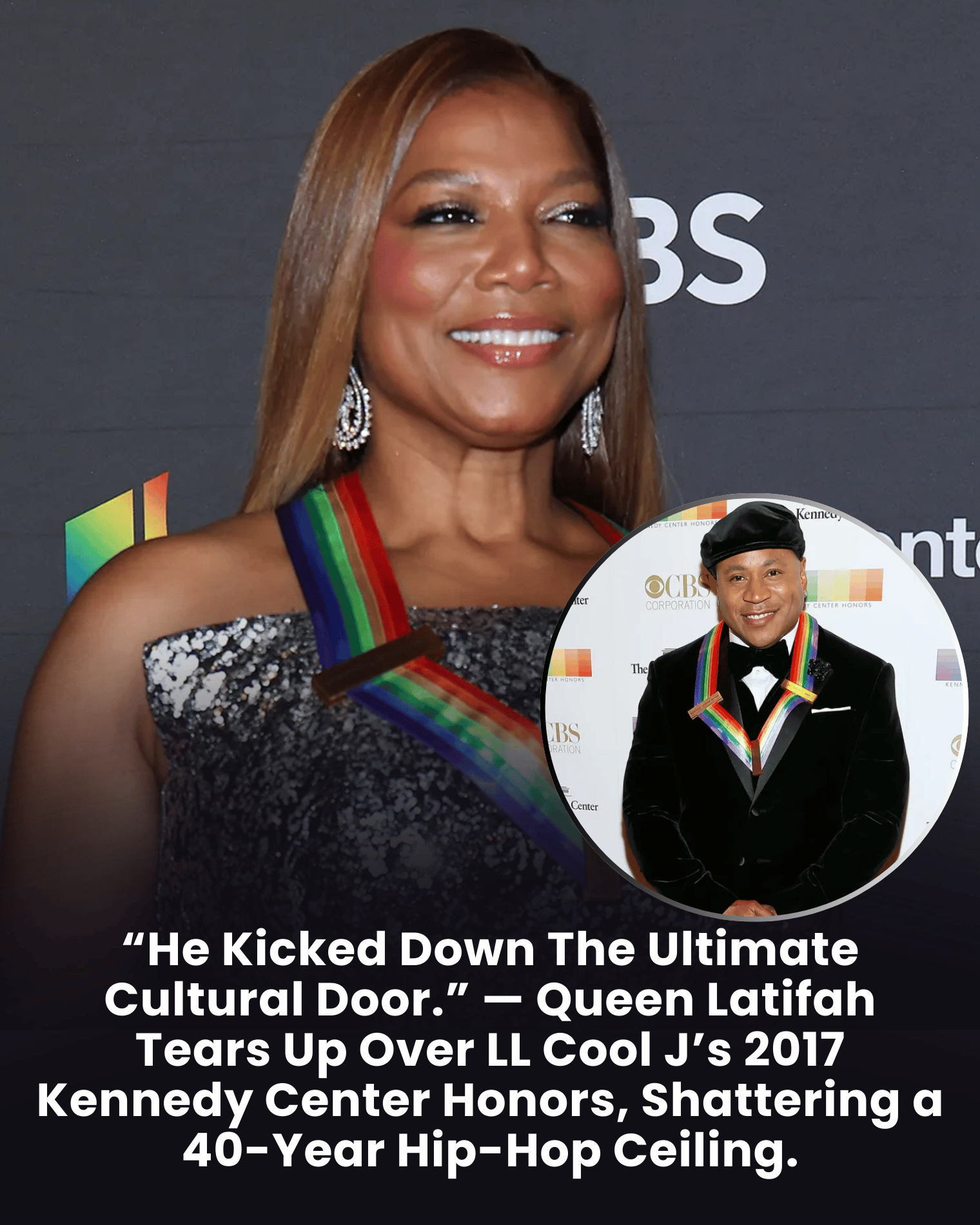
In December 2017, the grand halls of John F. Kennedy Center for the Performing Arts carried a sense of cultural history unfolding in real time. The annual Kennedy Center Honors had long celebrated giants of classical music, film, theater, and traditional pop culture. Yet on that night, something unprecedented happened—something that many in the hip-hop world had been waiting decades to see.
Among those seated in the audience was Queen Latifah, a pioneer in her own right. As she watched the ceremony unfold, she felt the emotional gravity of the moment building with every passing minute. The honoree standing in the presidential box was none other than LL Cool J, who had just become the first hip-hop artist in history to receive the prestigious recognition.
For Latifah, the significance of the moment went far beyond a single award. Hip-hop had spent nearly forty years fighting for legitimacy in spaces that often dismissed it as a passing cultural trend. From the late 1970s onward, rap music had grown from block parties and underground mixtapes into a global force. Yet many traditional arts institutions had been slow to recognize its influence. Sitting inside one of America's most prestigious cultural venues, Latifah realized she was witnessing the symbolic end of that long struggle for acknowledgment.
She later described the moment as watching a door finally being kicked open—one that had remained closed to hip-hop for generations. When LL Cool J stood smiling in the balcony reserved for honorees, the entire room seemed to recognize the weight of the milestone. It was not simply a celebration of one artist's career. It was a recognition of an entire genre that had reshaped music, language, fashion, and global culture.
LL Cool J's journey made the moment even more meaningful. Born and raised in Queens, New York, he began his career as a teenager with relentless determination and a sharp lyrical voice. His early work helped define the sound of hip-hop's golden era, blending bravado, storytelling, and emotional honesty in ways that influenced countless artists who followed. Over three decades, he evolved from a street poet into a multimedia powerhouse—balancing chart-topping music with acting roles, television hosting, and cultural leadership.
Latifah reflected on how that thirty-year journey represented the hustle that built hip-hop itself. The genre had not been handed respect by traditional institutions; it had earned it through sheer cultural power. Hip-hop reshaped global entertainment, dominated charts, fueled billion-dollar industries, and created a new language for generations of young people. Yet moments like the Kennedy Center Honors demonstrated something deeper—the acknowledgment that rap music belonged in the same cultural conversation as jazz legends, opera singers, and classical composers.
As tributes filled the theater that night, the emotion in the room became impossible to ignore. For many artists in attendance, the recognition of LL Cool J felt like recognition of their own struggles and victories as well. It symbolized decades of innovation, resistance, and creativity finally receiving the respect it deserved from the highest levels of the arts establishment.
For Queen Latifah, watching the ceremony unfold was profoundly moving. The moment represented both celebration and validation. Hip-hop, once dismissed as a fleeting street movement, had proven itself to be one of the most influential cultural forces of the modern era.
And as LL Cool J stood under the lights of the Kennedy Center, smiling with quiet pride, it was clear that the honor represented more than a personal achievement. It marked the moment when hip-hop officially crossed a cultural threshold—no longer knocking on the doors of high art, but standing inside as a recognized pillar of it.