
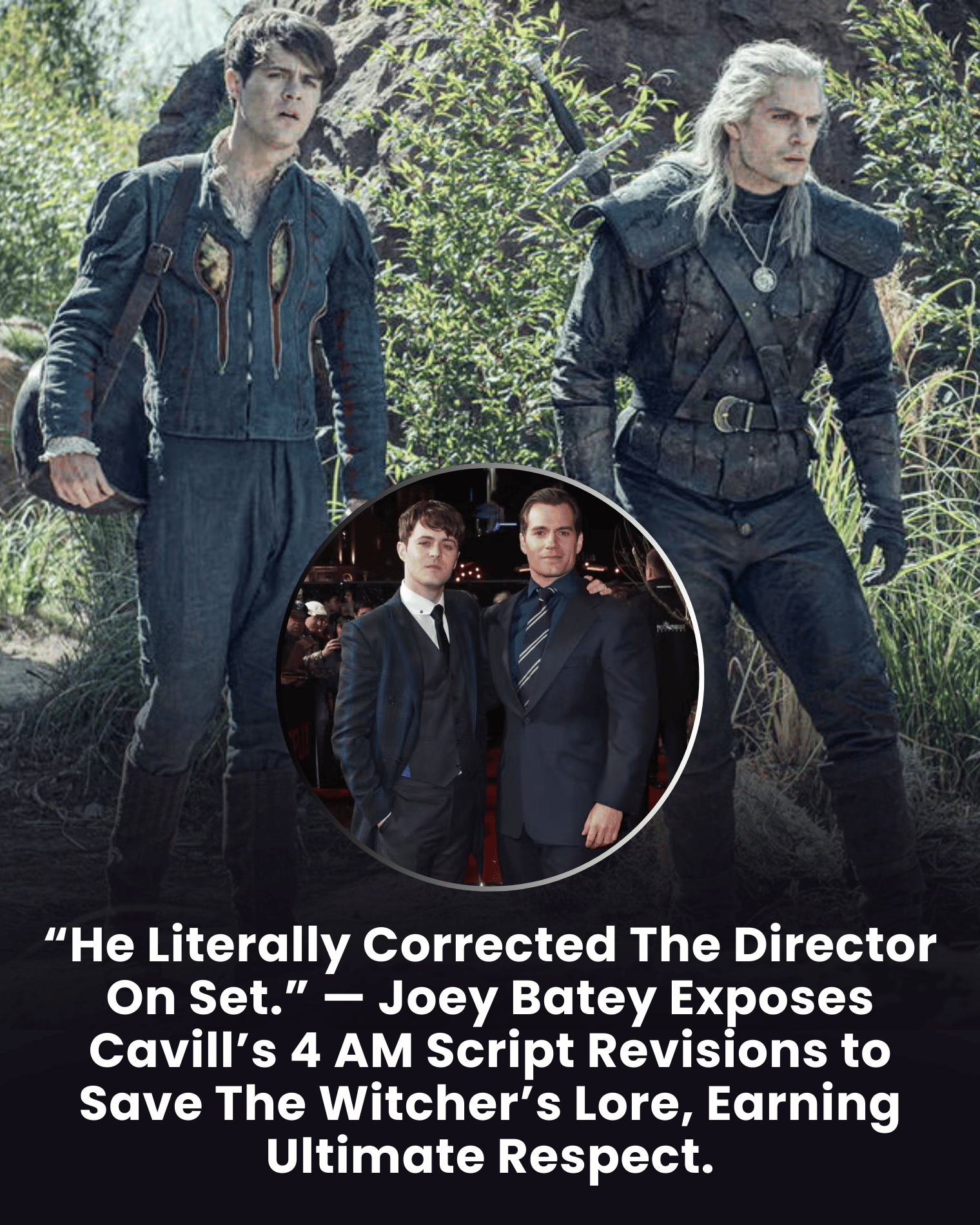
Few actors are as openly devoted to the worlds they portray as Henry Cavill has been with the fantasy universe of The Witcher. According to his co-star Joey Batey, Cavill's passion for the source material often extended far beyond memorizing lines or performing fight scenes. On the set of the Netflix series The Witcher, Cavill's deep understanding of the books sometimes influenced how scenes were ultimately filmed.
Batey, who plays the quick-witted bard Jaskier, has repeatedly praised Cavill for possessing what he calls an "encyclopedic" knowledge of the stories created by Andrzej Sapkowski. Unlike many actors who familiarize themselves only with the script provided, Cavill had already read the novels multiple times before the series began production. He frequently carried a worn, dog-eared copy of the books with him while filming.
During the production of Season 2, Batey recalled a particularly memorable moment that illustrated just how seriously Cavill took the role of Geralt of Rivia. In the middle of preparing a scene, a director proposed staging the moment in a way that conflicted with the established magic system described in Sapkowski's novels. The idea involved Geralt using a specific magical sign in a situation where, according to the books, the character would never use it.
Rather than simply following the direction and moving on, Cavill reportedly paused the production to raise the issue. The series had a massive budget—often estimated at roughly $10 million per episode—meaning that every delay on set carried real financial weight. Yet Cavill calmly stepped in and explained that the scene contradicted the lore fans knew so well.
Batey remembers Cavill pulling out his personal copy of the novel and referencing the exact passages that clarified how Geralt would behave in that moment. Instead of challenging the director with arrogance, he approached the conversation respectfully but firmly, emphasizing that consistency with the established world mattered deeply to the audience.
What impressed the cast and crew most was Cavill's motivation. According to Batey, the intervention was not driven by ego or a desire to control the production. Cavill's concern was preserving the internal logic of the universe created by Sapkowski. He believed that fans who had spent years reading the books would immediately notice inconsistencies if the show ignored the rules of its own mythology.
That level of commitment gradually earned Cavill enormous respect on set. Many actors appreciated having someone who cared so intensely about the authenticity of the story. For Batey and others in the cast, Cavill's dedication helped establish a tone of seriousness about honoring the original material.
Stories from the production also describe Cavill staying up late—sometimes until four in the morning—reviewing scripts and suggesting small revisions that could align scenes more closely with the novels. These changes were often subtle but meaningful, shaping dialogue, character choices, or magical details so that longtime fans would recognize the world they loved.
For Batey, those moments revealed why Cavill naturally became a leader among the cast. His enthusiasm for the story was contagious. Instead of treating the show as just another television role, he approached it like a lifelong fan entrusted with protecting something important.
In an industry where adaptations sometimes drift far from their source material, Cavill's dedication stood out. According to Batey, it was that relentless passion for authenticity—and respect for the fans—that made Cavill not just the actor playing Geralt, but the emotional anchor of the entire production.